Chapter 03 When Will You Leave, Guest
Today, on the fourth day of your arrival, this question is swirling repeatedly in my mind: When will you leave, guest?
Right in front of where you are sitting, nonchalantly blowing cigarette smoke, there is a calendar. You see it, don’t you! Its dates flutter modestly within their limits. For the past two days, I have been changing the dates, showing them to you. You know, if you know how to calculate that this is the fourth day, the fourth heavy day of your continuous hospitality! But there seems to be no possibility of your departure. After traveling millions of miles, even those two astronauts did not stay on the moon for as long as you have come to my house after a short journey. You have imprinted the marks of your heavy lotus-feet on my ground, you have established an intimate personal relationship with me, you have seen the violet cliff of my economic limits; you have dug up quite a bit of my soil. Now you go back, guest! It is high time for you to leave. Doesn’t your earth call you?
That day when you came, my heart leapt with some unknown apprehension. Somewhere deep inside, my wallet trembled. Despite that, with an affection-soaked smile, I hugged you and my wife respectfully greeted you with a ’namaste’. In your honor, O guest, we suddenly transformed the night’s meal into an upper-middle-class dinner. You will remember that besides two vegetables and raita, we also made a sweet dish. At the root of all this enthusiasm and dedication was a hope. The hope$ \qquad $ was that the next day, you would leave by some train, carrying the impression of splendid hospitality in your heart. We would urge you to stay, but you would not agree and would leave like a good guest. But that did not happen! The next day too, you remained at home with your guest-friendly smile. We swallowed our pain and remained cheerful. From the high point of welcome and hospitality where we had taken you, we descended and again bestowed the dignity of lunch upon the afternoon meal and showed you a movie at night. This is the final limit of our hospitality, beyond which we have not extended for anyone. Immediately after this, that emotional, tearful moment of farewell should have arrived, when you would depart and we would go to drop you at the station. But you did not do so.
On the morning of the third day, you said to me, “I want to give clothes to the washerman.” This blow was unexpected and its wound was poignant. I had not anticipated that the period of your proximity would suddenly stretch like rubber like this. For the first time, I felt that a guest is not always a deity; he can be human and, to some extent, a demon as well.
“Let’s give them to a laundry; they will be washed quickly,” I said. In my mind, a belief was growing that you had to leave soon.
“Where is the laundry?”
“Let’s go,” I said and started putting on a formal kurta over my casual vest.
“Where are you going?” my wife asked.
“To give his clothes to the laundry,” I said.
My wife’s eyes suddenly grew wide. Some years ago, seeing such eyes of hers, I had ended my journey of loneliness and opened the bed. But now, when those same eyes grow wide, the mind begins to shrink. They had grown wide with the apprehension and fear that the guest would stay for many days.
And the apprehension was not unfounded, guest! You are not leaving. The clothes given to the laundry have been washed and returned, and you are still here. The bedsheet wrinkled by your hefty body has been changed, and you are still here. The smile that used to burst forth upon seeing you has gradually faded and now vanished. The colorful balloons of laughter, which until yesterday floated in the sky of this room, are no longer visible. The bouncing ball of conversation, after bouncing off all corners of the discussion area, has fallen silent in the center. Now neither you are moving it, nor am I. Since yesterday, I have been reading a novel and you have been flipping through the pages of a film magazine. The exchange of words has ceased and the topics of discussion have been exhausted. Family, children, job, films, politics, relatives, transfers, old friends, family planning, inflation, literature, and even by winking, we have mentioned old girlfriends, and now there is silence. Cordiality is now slowly transforming into boredom. Emotions are assuming the form of abuses, but you are not leaving. With what invisible glue has your personality stuck here, I, along with my family, am unable to understand this secret.
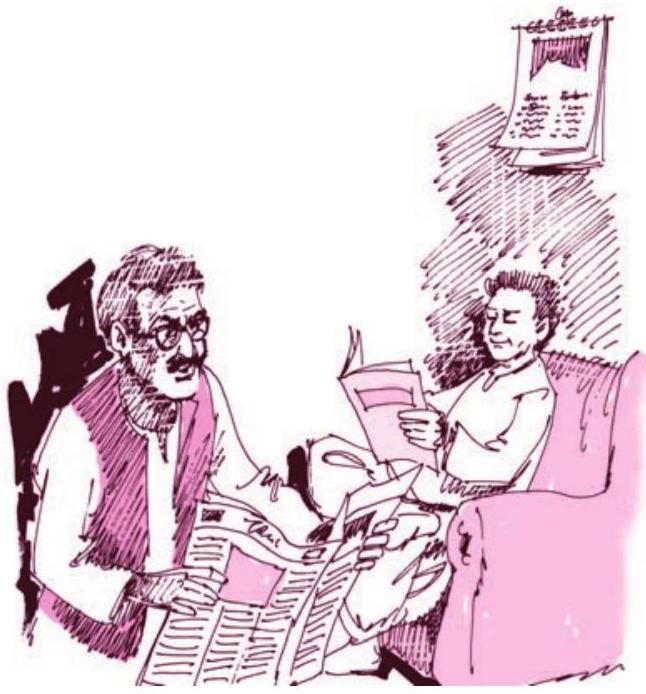
Again and again, this question arises: When will you leave, guest?
Yesterday, my wife asked softly, “How long will they stay?”
I shrugged my shoulders, “What can I say!”
“I am making khichdi today. It will be light.”
“Make it.”
The warmth of hospitality was ending. We had started from dinner, and arrived at khichdi. Even now, if you
do not give your bed a circular shape, we will have to go to fasting. Your-my relationship is going through a phase of transition. This is the extreme moment for your departure. You go, O guest!
You are enjoying it here, aren’t you! I know. It feels good at others’ places. If it were up to them, everyone would live at others’ homes, but that cannot happen. Songs about the importance of one’s own home have been sung for this reason. Home has been called sweet-home for this reason, so that people do not run to cut the sweetness of another’s home. You are enjoying it here, but think, dear, that decency is also a thing, and ‘get out’ is also a sentence that can be spoken.
After making another night resonant with your snores, the ray that will come on your bed tomorrow will be the familiar ray of the fifth sun after your arrival here. Hopefully, it will kiss you and you will take the honorable decision to return home. That will be the last morning of my tolerance. After that, I will not be able to stand and will stagger. My guest, I know that a guest is a deity, but after all, I am also human. I am not a deity like you. A deity and a human cannot stay together for long. The deity gives a glimpse and returns. You return, guest! Your divinity will remain safe in this. Let this human land on his side, before that you return!
Uff, when will you leave, guest?
Questions-Exercises
#Oral
Answer the following questions in one or two lines-
1. For how many days has the guest been staying at the author’s house?
2. How are the dates on the calendar fluttering?
3. How did the husband and wife welcome the guest?
4. What dignity was bestowed upon the afternoon meal?
5. What did the guest say on the morning of the third day?
6. What happened when the warmth of hospitality ended?
Written
( a ) Write answers to the following questions (in 25-30 words)-
1. How did the author want to bid farewell to the guest?
2. Explain the following statements from the text-
(a) Somewhere deep inside, my wallet trembled.
(b) A guest is not always a deity; he can be human and, to some extent, a demon as well.
(c) So that people do not run to cut the sweetness of another’s home.
(d) That will be the last morning of my tolerance.
(e) A deity and a human cannot stay together for long.
( b ) Write answers to the following questions (in 50-60 words)-
1. Which blow was unexpected and what was its effect on the author?
2. What do you understand by ‘relationships going through a phase of transition’? Write in detail.
3. When the guest did not leave for four days, what changes occurred in the author’s behavior?
Language Study
1. Write two synonyms each for the following words: Moon, Mention, Blow, Warmth, Intimate
2. Change the following sentences as directed-
(a) We will go to drop you at the station. (Negative sentence)
(b) Let’s give them to a laundry; they will be washed quickly. (Interrogative sentence)
(c) The warmth of hospitality was ending. (Future tense)
(d) To give his clothes. (Locative interrogative)
(e) How long will they stay? (Negative)
3. Observe the various uses of the verb ‘चुकना’ in these sentences from the text and understand the sentence structure-
(a) You have already imprinted the marks of your heavy lotus-feet on my ground.
(b) You have already dug up quite a bit of my soil.
(c) The high point of respect and hospitality where we had already taken you.
(d) The exchange of words has ceased and the topics of discussion have been exhausted.
(e) The bedsheet wrinkled by your hefty body has already been changed and you are still here.
4. Pay attention to the use of ‘तुम’ in the following sentence structures-
(a) The clothes given to the laundry have been washed and returned, and you are still here.
(b) The smile that used to burst forth upon seeing you has gradually faded and now vanished.
(c) The bedsheet wrinkled by your hefty body has been changed.
(d) Since yesterday, I have been reading a novel and you have been flipping through the pages of a film magazine.
(e) Emotions are assuming the form of abuses, but you are not leaving.
Competency Expansion
1. Explain the saying ‘अतिथि देवो भव’ and assess it in the context of modern times.
2. Students should narrate their experience of hosting guests who came to their house in class.
3. Sequentially list the author’s reactions when the guest stayed longer than expected.
Vocabulary and Notes Notes
| आगमन | Arrival |
| निस्संकोच | Without hesitation, unabashedly |
| नम्रता | Humility, the quality of being gentle |
| सतत | Continuous, incessant |
| आतिथ्य | Hospitality |
| एस्ट्रॉनाट्स | Astronauts |
| अंतरंग | Intimate, close |
| आशंका | Apprehension, fear, danger |
| मेहमाननवाज़ी | Guest hospitality |
| छोर | Edge, limit |
| भावभीनी | Full of emotion, heartfelt |
| आघात | Blow, shock |
| अप्रत्याशित | Unexpected, unforeseen |
| मार्मिक | Poignant, touching |
| सामीप्य | Proximity, closeness |
| औपचारिक | Formal, ceremonial |
| निर्मूल | Baseless, without foundation |
| कोनलों | From corners |
| सौहार्द | Cordiality, friendliness |
| रूपांतरित | Transformed, changed in form |
| ऊष्मा | Warmth, heat |
| संक्रमण | Transition, passing from one state to another |
| गुंजायमान | Resonant, echoing |








 BETA
BETA


