Chapter 03 The Culture of Consumerism
Everything is changing slowly. A new lifestyle is establishing its dominance. Along with it comes a new philosophy of life - the philosophy of consumerism. There is an emphasis on increasing production everywhere. This production is for you; it is for your consumption, for your pleasure. The definition of ‘happiness’ has changed. Consumption-enjoyment itself is happiness. A subtle change has occurred in the new situation. The products are for you, but you forget that knowingly or unknowingly in today’s environment, your character is also changing and you are becoming increasingly devoted to the product.
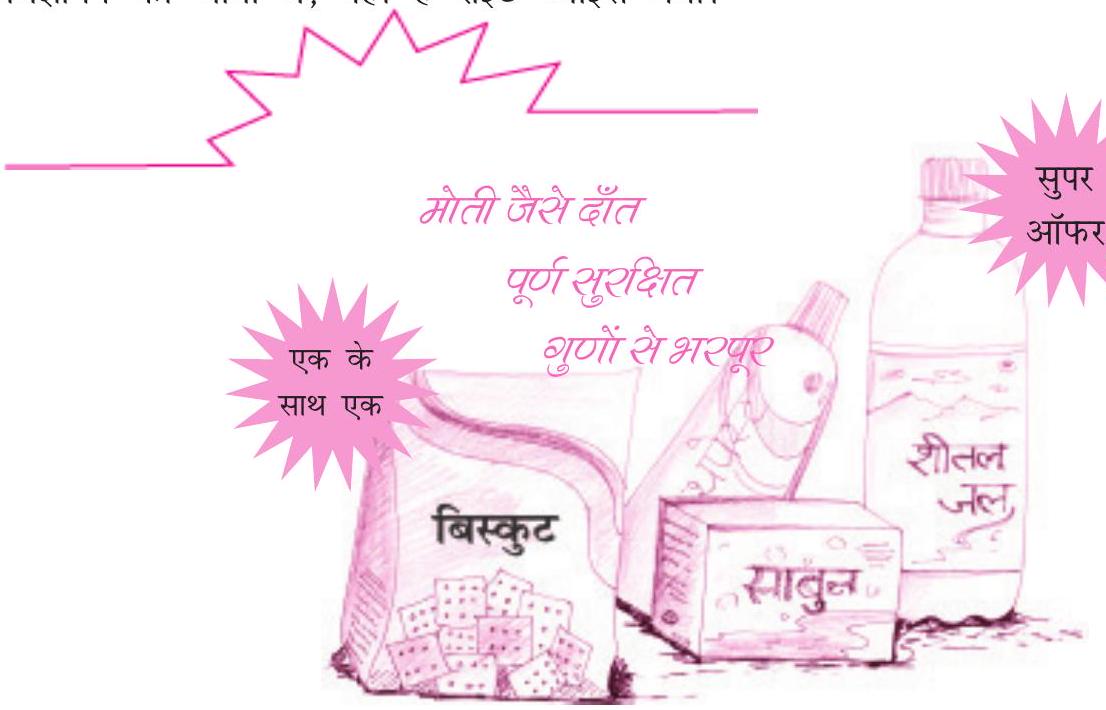
The market is filled with luxury items, which are constantly engaged in a desperate effort to lure you. Take the items used in daily life. Need toothpaste? This makes teeth shine like pearls, this removes bad breath. This strengthens gums and this provides ‘complete protection’. That magic formula of a toothpaste does everything that three-four different pastes do separately. One is rich in the properties of acacia or neem, another is made from a mixture of herbs and minerals approved and recognized by sages and saints. Choose whichever you like. If the paste is good, the brush should also be good. Different in size, color, texture, reach, and cleaning ability, one better than the other. Mouthwash is also needed to avoid bad breath. The list can be even longer, but the bill for so many things alone will be quite large, because you probably prefer to buy heavily advertised and expensive brands. The crowd of cosmetics is astounding - new products keep getting added to it every month.
Just look at soaps. One has a mild fragrance, another has a strong one. One keeps your body fresh all day, another prevents sweat, a third protects you from germs. Here, take the secret of movie stars’ beauty, their favorite soap. Want to understand the meaning of truth? Here, take this. Want to keep the body pure? Here, take this soap made in pure Ganga water. To keep the skin soft, take this - it’s expensive, but it will enhance your beauty. It’s a common thing for dressing tables of elite women to have beauty products worth thirty-thirty thousand. Order perfume from Paris, that much more will be spent. These are status symbols, they indicate your status in society. Men are not far behind in this race. Earlier, soap and oil used to suffice for them. After-shave and cologne came later. Now, a dozen or two dozen more items have been added to this list.
Leave this material. Come to the world of objects and attire. Boutiques have opened everywhere, new designs of clothing have come into the market. These are trendy and expensive too. Last year’s fashion this year? It’s a shame. A watch used to show time earlier. If you want to use it for the same purpose, you can get one for four-five hundred. To show off your status, you can also buy a watch worth fifty-sixty thousand to one-one and a half lakh. Whether you understand music or not, an expensive music system is essential. It doesn’t matter if you can’t even operate it properly. Computers are bought for work, but the number of people buying them just for show is not small either. There are five-star hotels for eating. Even weddings are starting to happen there now. If you fall ill, come to five-star hospitals. In addition to comforts and good treatment, this experience will also remain a topic of discussion for quite some time. There are five-star public schools for studies, soon perhaps colleges and universities will also be built. This situation has not yet arrived in India, but in America and some European countries, you can even arrange your last rites and eternal rest before you die - at a price. There will always be green grass around your grave, flowers of your choice. If you wish, there will be fountains there and continuous music in a soft sound. Tomorrow in India
this might also become possible. What is happening in America today, may come to India tomorrow as well. There are many forms of prestige. Even if they are ridiculous. This is a small glimpse of a consumerist society. This is a society of the elite, but common people also look at it with covetous eyes. In their view, in the language of an advertisement, this is the right choice, baby.
Now let’s turn to the serious aspect of the subject. Why is this consumer culture developing in India?
Elements of feudal culture have existed in India before as well. Consumerism has been linked to this culture. Today, the feudal lords have changed, the idiom of feudal culture has changed.
No matter how much we talk about cultural identity; traditions have been devalued, beliefs have eroded. The bitter truth is that we are accepting intellectual slavery, becoming cultural colonies of the West. Our new culture is a culture of imitation. We are increasingly adopting false standards of modernity. In the blind competition for prestige, by losing what is ours, we are increasingly falling into the grip of pseudo-modernity.
Due to the weakening of the controlling forces of culture, we are becoming disoriented. Our society itself is becoming other-directed. The subtle mechanisms of advertising and propaganda are changing our mentality. They have the power of fascination, and also of subjugation.
Ultimately, what will be the result of the spread of this culture? This is a matter of serious concern. There is a gross wastage of our limited resources. The quality of life does not improve with potato chips. Nor with heavily advertised soft drinks. Even if they are international. However modern pizza and burgers may be, they are junk food. The distance between classes in society is increasing, social concerns are decreasing. This growing disparity in living standards is giving rise to resentment and unrest. As this culture of show-off spreads, social unrest will also increase. Our cultural identity is already declining, and we are also suffering from goal-confusion. The grand objectives of development are receding, we are pursuing the immediate goals of false satisfaction. Boundaries are breaking, moral standards are loosening. Individual-centricity is increasing, selfishness is overpowering altruism. Aspirations for enjoyment are touching the sky. At what point will this race stop?
Gandhiji had said that we should keep our doors and windows open for healthy cultural influences but remain grounded in our foundation. Consumer culture is shaking the very foundation of our society. This is a big danger. It is a big challenge for the future.
Questions-Exercises
1. According to the author, what is meant by ‘happiness’ in life?
2. How is today’s consumerist culture affecting our daily life?
3. Why has the author called consumer culture a challenge for our society?
4. Explain the meaning-
(क) Knowingly or unknowingly in today’s environment, your character is also changing and you are becoming increasingly devoted to the product.
(ख) There are many forms of prestige, even if they are ridiculous.
Composition and Expression
5. Whether an item is useful for us or not, but after seeing its advertisement on TV, we definitely become eager to buy it? Why?
6. In your opinion, should the basis for buying goods be the quality of the product or its advertisement? Explain with reasoning.
7. Based on the text, express your thoughts on the ‘culture of show-off’ flourishing in today’s consumerist era.
8. How is today’s consumer culture affecting our customs and festivals? Write a paragraph based on your experience.
Language Study
9. Everything is changing slowly.
In this sentence, ‘changing’ is the verb. How is this action happening? - slowly. Therefore, here ‘slowly’ is an adverb. Words that describe the characteristic of a verb are called adverbs. Where in a sentence we find out how, when, how much, and where the action is happening, that word is called an adverb.
(क) Keeping the above example in mind, pick out five sentences from the text containing adverbs and write them.
(ख) Make sentences using these adverb words: slowly, loudly, continuously, always, nowadays, less, more, here, there, outside.
(ग) Pick out the adverb and adjective words from the sentences given below and write them separately.
Sentence $\qquad$ Adverb $\qquad$ Adjective
(1) It has been raining continuously since last night.
(2) Seeing the ripe mangoes on the tree, the children’s mouths watered.
(3) The mild aroma of pulao coming from the kitchen made me feel very hungry.
(4) Eat only as much as you are hungry.
(5) The market is filled with luxury items nowadays.
Beyond the Text Activities
- Write a dialogue between a teacher and a student on the topic ‘The increasing influence of advertisements shown on television on children’ in dialogue style.
- Through this lesson, you have learned in detail about consumer culture. Now, with the help of your teacher, gather information about feudal culture and express your views in class for or against the topic given below.
Is Consumer Culture Just an Evolved Form of Feudal Culture?
- You see and hear dozens of advertisements on TV every day, and some of them stick on your tongue. Prepare advertisements for any two products of your choice.
| Dominance | - | Predominance |
|---|---|---|
| Advertised | - | Promoted/Informed |
| Infinite | - | That which has no end |
| Cosmetics | - | Materials that enhance beauty |
| Attire | - | Clothing |
| Identity | - | Existence, Identity |
| Devaluation | - | Lowering the value |
| Erosion | - | Destruction |
|---|---|---|
| Colony | - | A conquered country where people from the conquering nation have come to settle |
| Paradigm | - | Standard |
| Competition | - | Rivalry |
| Pseudo | - | Artificial |
| Disoriented | - | To stray from the path, directionless |
| Subjugation | - | To bring under control |
| Wastage | - | Extravagance |
| Immediate | - | Of that very moment |
| Altruism | - | Welfare of others |
Also Know
Cultural Identity - Identity means recognition. We Indians have our own cultural identity. This cultural identity is formed by the amalgamation of various cultures of India. This mixed cultural identity is what we call cultural identity.
Cultural Colony - The countries over which the conquering country establishes its dominance are called its colonies. Generally, the culture of the conquering country is imposed on the conquered countries, on the other hand, due to an inferiority complex, the conquered countries also start adopting the culture of the conquering country. To keep adopting the culture of the conquering country for a long time is to become a cultural colony.
Intellectual Slavery - To accept someone else’s intellect without adopting a critical perspective, considering them superior, is intellectual slavery.
Pseudo-Modernity - Modernity is concerned with both thought and behavior. Accepting novelty with a rational, scientific, and critical perspective is modernity. When we accept modernity not with an ideological commitment but as a fashion, it is called pseudo-modernity.








 BETA
BETA


